
Views: 0 Author: Site Editor Publish Time: 2026-10-13 Origin: Site


Cargo shifting during transit presents massive operational and financial risks. Failed securing systems lead directly to damaged goods, port rejections, and severe liability claims. Logistics managers constantly balance load security against regulatory compliance and material costs when selecting tie-down equipment for shipping containers. You must choose systems that handle extreme dynamic forces. Two primary options dominate the market for heavy loads. You will often evaluate a composite cord strap vs ratchet strap. Both systems offer distinct mechanical advantages and present unique logistical challenges. We will analyze their strengths, limitations, and ideal use cases. This technical evaluation provides the field-tested data you need to guide your procurement decisions and improve load safety across your entire supply chain.
Application Match: Composite cord strapping is the industry standard for one-way, export container lashing due to its low cost-per-use and high weather resistance, whereas ratchet straps dominate closed-loop, domestic, or flatbed transit where reusability offsets higher initial costs.
Tensioning Mechanics: Ratchet straps offer superior mechanical advantage for achieving high initial tension, while composite straps rely on manual or pneumatic tensioners paired with galvanized wire buckles that excel at absorbing dynamic shock during transit.
Durability & Compliance: Heavy duty composite strapping eliminates the risk of rust and cargo damage associated with steel chains or degraded ratchet hardware, making it highly suitable for maritime environments.
Financial Considerations: The decision hinges on retrieval logistics; if you cannot recover the strap after delivery, composite cord is the only economically viable option.
Securing freight inside a container requires precise engineering. You cannot rely on guesswork or visual estimates. Every load demands a calculated approach to restraint based on the specific forces it will encounter during its journey.
Effective cargo restraint relies on specific performance metrics. System Breaking Strength (SBS) measures the maximum load a complete tie-down assembly can handle before catastrophic failure. Linear Breaking Strength (LBS) measures the strength of the webbing or strapping alone. True load security depends entirely on the SBS. The weakest point in any securing system is usually the buckle, the hook, or the tensioning hardware. Dynamic load handling is equally critical. Straps must stretch slightly under impact and return to their original length. Rigid systems often snap during sudden stops because they transfer the entire shock load directly to the anchor points.
You must account for unpredictable forces during transit. Calculate the total cargo weight first. Then, apply a mandatory safety factor to the Working Load Limit (WLL). The WLL is typically one-third of the SBS for synthetic web tie-downs. This buffer absorbs dynamic G-forces. Sudden braking, evasive maneuvers, or severe weather multiplies the effective weight of your cargo. Proper cargo securing methods ensure the straps handle the static load plus these unexpected transit stresses. For example, a 10,000-pound machine requires a securing system with an aggregate WLL of at least 5,000 pounds to meet standard highway regulations, but maritime shipping often demands even higher safety margins.
Different transport modes exert unique forces on your freight. You must match your securing equipment to the specific physics of the route.
Transit Mode | Primary Forces Exerted | Impact on Cargo Securing Systems |
|---|---|---|
Maritime Shipping | Pitch, roll, heave, sway (up to 0.8G lateral) | Requires high corrosion resistance and continuous tension retention during cyclic ocean swells. |
Rail Transport | Severe longitudinal impacts (up to 4G during shunting) | Demands extreme shock absorption and high System Breaking Strength to prevent load shifting. |
Over-the-Road (OTR) | Rapid acceleration, hard braking, vertical vibration | Requires systems that resist loosening from road vibration and allow for rapid re-tensioning. |
Compliance is mandatory across all jurisdictions. Port authorities, weigh stations, and rail operators enforce strict guidelines. The Association of American Railroads (AAR) sets rigorous standards for rail freight, often requiring specific approvals for strapping materials. The International Maritime Organization (IMO) governs ocean transit through the CTU Code. Your chosen tie-down systems must meet or exceed these regulatory frameworks. Non-compliance results in stopped shipments, out-of-service violations, hefty fines, and delayed deliveries.
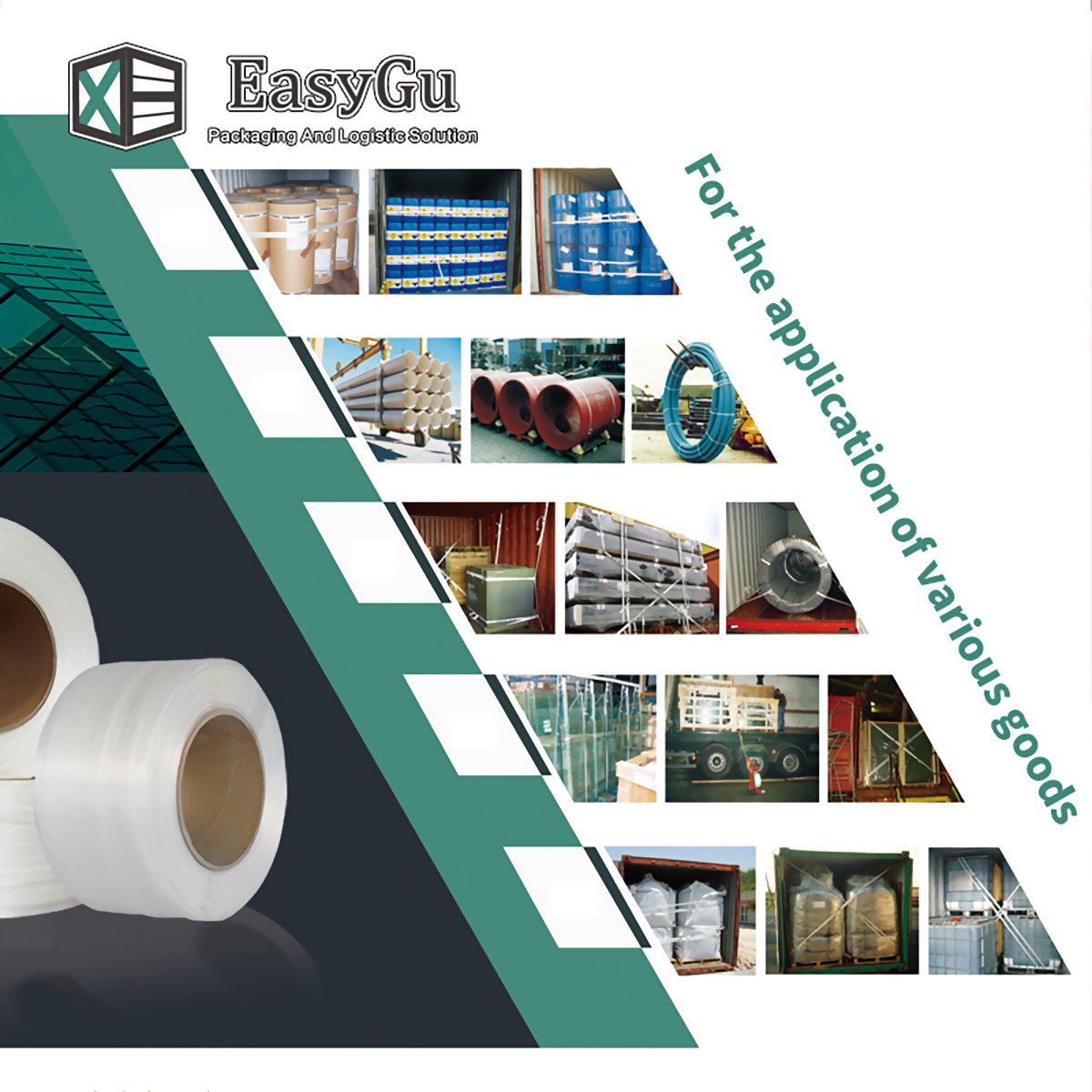
Composite strapping offers a modern, highly engineered alternative to traditional steel banding. It combines massive tensile strength with the flexibility needed to protect delicate cargo.
The construction of composite cord strapping relies on advanced synthetic materials. It consists of parallel polyester yarns running the length of the strap. These yarns provide the core tensile strength, allowing the strap to hold thousands of pounds. A clear, extruded polymer coating encases these yarns. This coating protects the load-bearing fibers against abrasion, moisture, and chemical exposure. It also keeps the yarns perfectly aligned under extreme tension, preventing the strap from flattening or twisting unevenly.
Composite straps require specific hardware to function correctly. They rely entirely on phosphate-coated or galvanized wire buckles. The physics of the joint efficiency dictates the success of the system. Joint efficiency refers to how well the buckle holds tension compared to the linear strength of the strap. When anchored to container D-rings, the operator threads the strap through the buckle in a specific pattern. Tension applied to the strap forces the wire buckle to bite down on the polymer coating. A properly threaded buckle achieves up to 90% joint efficiency, meaning the connection is nearly as strong as the strap itself.
This material offers distinct operational benefits for logistics teams handling heavy freight.
High strength-to-weight ratio makes it exceptionally easy for a single operator to handle and apply.
Soft, pliable edges prevent damage to cargo packaging, eliminating the need for edge protectors in many scenarios.
The polymer coating completely eliminates corrosion risks, ensuring the strap maintains its integrity in wet environments.
Inherent elasticity provides excellent shock-absorbency during transit, allowing the strap to stretch and recover without breaking.
It is significantly safer to cut under tension than steel banding, which can whip back and cause severe lacerations.
Despite its strengths, composite strapping has specific operational drawbacks. Tensioning requires manual effort using a specialized windlass tool or a battery-operated pneumatic tensioner. Operators face a distinct learning curve when threading the wire buckles. Incorrect threading drastically reduces joint efficiency, leading to load failure. Furthermore, the system is designed strictly for single-use applications. You must cut and discard the strap at the destination, which requires a continuous supply of new materials for every shipment.
Ratchet straps are ubiquitous in the logistics and flatbed trucking industry. They provide rapid, reliable, and repeatable tensioning for various load types.
Standard ratchet tie down straps utilize tightly woven polyester webbing. Polyester is the industry standard because it resists stretching under static loads, keeping the cargo firmly in place. It also withstands UV degradation better than nylon. The webbing pairs with heavy-duty steel hardware, including the ratchet mechanism and the end fittings. This combination creates a robust, highly reusable securing system built for years of service.
Selecting the correct end fitting is critical for load safety. You must match the hook to the specific anchor point on the vehicle or container.
Hook Type | Ideal Application | Common Risks if Misused |
|---|---|---|
Wire J-Hooks | Standard D-rings and recessed pan fittings. | Can slip out if the strap loses tension during transit. |
Flat Hooks | Flatbed trailer rub rails and side pockets. | Point-loading failure if hooked onto a rounded anchor. |
Chain Anchors | Heavy machinery transport and specialized flatbeds. | Causes severe abrasion to the cargo if it makes direct contact. |
Manufacturers offer several design variations to suit different operational needs. Traditional ratchet straps feature a standard gear, mandrel, and pawl mechanism. Retractable ratchet straps house the webbing in a spring-loaded spool. Retractable models improve storage efficiency and reduce webbing wear by keeping excess strap contained and out of the dirt. However, retractable units often have lower WLL constraints than traditional heavy-duty models, making them better suited for lighter freight.
The ratcheting gear system provides a massive mechanical advantage. Operators pump the handle to wind the webbing around a slotted steel mandrel. This action applies precise, high-level tension to the load. It requires minimal physical exertion compared to manual pulling. Once the desired tension is reached, the locking pawl drops into the gear teeth, securing the mechanism and holding the tension indefinitely.
Ratchet straps excel in specific operational environments where speed and reusability are paramount.
Complete reusability lowers long-term material costs for dedicated shipping routes.
Rapid application speeds up loading dock operations and turnaround times.
Easy re-tensioning allows drivers to adjust loads mid-trip if the cargo settles.
High familiarity among OTR drivers reduces training time and application errors.
Mechanical systems introduce specific vulnerabilities. Steel parts rust rapidly in humid or saline environments, weakening the mechanism. Gears jam if exposed to dirt, mud, or ice. The upfront cost per strap is significantly higher than composite alternatives. Most importantly, recovering them in international export scenarios is logistically impossible. You lose the expensive asset once the container ships overseas.
Choosing between these systems requires a direct comparison of their mechanical properties and operational traits under real-world conditions.
Both systems handle extreme weights, but they achieve their strength differently. Heavy duty composite strapping often matches or exceeds the SBS of industrial-grade ratchet straps. A 32mm composite strap paired with a heavy-duty wire buckle can exceed 2,000 kg in system strength. Ratchet straps offer similar ratings, heavily dependent on the webbing width and the grade of the steel hardware.
Lighter alternatives fail completely in container freight. Cam buckle straps rely on friction alone and cannot generate the high tension required for heavy loads. Container freight necessitates the mechanical force of a ratchet gear or a tensioned composite system to prevent longitudinal shifting.
Joint efficiency heavily impacts the true WLL of both systems. A ratchet strap's sewn loop retains near 100% of the webbing strength. A composite strap's wire buckle retains 85-90%. You must calculate your safety buffer based on the joint strength, not just the linear webbing strength.
Dynamic shock loads separate the two materials in the field. Composite strapping has elastic memory. It elongates slightly under severe impact and recovers its shape, absorbing the shock. Woven polyester ratchet straps hold rigidly. Under severe impact, a rigid strap transfers the entire force directly to the anchor point, risking D-ring failure or tearing the webbing.
Tensioning tools differ drastically. Composite systems use manual windlass tensioners or battery-operated pneumatic tools. These tools grip the strap and pull it through the buckle. Ratchet straps use an integrated mechanical handle. The ratchet handle is faster to operate but requires physical clearance space to pump the handle up and down.
Elongation percentages matter during transit. Both materials use polyester, which limits stretch. However, composite cord elongates slightly more under maximum load. This prevents cargo from loosening during temperature fluctuations or when the cargo settles. Ratchet straps may require manual re-tensioning by the driver if the cargo shifts.
Financial analysis depends entirely on your transit loop. One-way international shipping heavily favors composite strapping. The cost-per-load is minimal, and you do not need to retrieve the straps. Closed-loop domestic shipping favors ratchet straps. The higher initial cost amortizes over dozens or hundreds of uses.
Ratchet straps carry hidden maintenance costs. You must inspect them regularly for cuts, burns, or abrasions. Rusted hardware requires immediate replacement. Frayed webbing mandates disposal according to FMCSA regulations. Return logistics also consume time, fuel, and administrative effort.
Sustainability profiles differ significantly. Composite polymers are single-use. You cut and discard them at the destination. However, they are lightweight and compact for disposal. Ratchet straps have a longer lifecycle, but eventually, you must dispose of mixed materials. Separating heavy steel hardware from polyester webbing complicates recycling efforts at the end of the product's life.
Maritime environments destroy unprotected steel. High-moisture, saline air causes rapid galvanic corrosion. Composite strapping thrives in these conditions. The polymer coating completely ignores saltwater and high humidity. Ratchet strap gears and hooks rust quickly unless they are heavily galvanized or manufactured from expensive stainless steel.
Cargo abrasion is a serious risk during transit. Ratchet hardware is heavy, rigid, and sharp. If the steel ratchet mechanism rubs against packaging, it causes severe damage. Composite cord features soft, pliable edges. It conforms to the cargo without cutting into cardboard boxes, plastic drums, or painted machinery.
Deploying a new securing system requires careful planning. You must train your workforce, enforce safety protocols, and ensure regulatory compliance.
Training burdens vary between the two systems. Threading a wire buckle for composite strapping requires specific technique. Operators must form the correct loop and ensure the strap sits flat against the metal. Incorrect threading causes catastrophic joint failure under load. Ratchets are generally intuitive. Most warehouse operators and drivers understand how to thread a mandrel immediately.
Safety hazards exist for both systems. Ratchet handles pose severe pinch hazards to fingers. Releasing a highly tensioned ratchet gear can cause violent snap-back. Operators must keep their hands clear of the gear teeth. Removing composite straps involves cutting them under extreme tension. Operators must stand to the side and use specialized safety cutters to prevent the strap from whipping outward and causing injury.
Port authorities and weigh station inspectors demand proof of compliance. You often need documentation and certification for your securing methods. DNV GL approvals verify performance in harsh maritime environments. AAR approvals are mandatory for North American rail freight. Ensure your supplier provides these certificates before purchasing.
Improper use leads directly to compliance failures. Using a damaged ratchet strap with a single cut in the webbing violates safety codes. Selecting the wrong hook type for a D-ring invites out-of-service violations. Using an undersized wire buckle for heavy-duty composite strapping reduces the WLL. Inspectors will flag these errors, halt your shipments, and issue fines.
Applying the right tool to the right job maximizes efficiency and safety. Evaluate your specific freight requirements carefully. Industrial transport packaging solutions must align perfectly with your logistical realities.
Certain operational scenarios demand the unique properties of composite materials.
International export containers where equipment retrieval is impossible or cost-prohibitive.
Securing chemical totes, steel drums, or machinery in highly corrosive maritime environments.
Applications requiring the strapping to conform tightly to irregular cargo shapes without causing damage.
Loads transported on rail networks requiring high shock absorption to survive shunting impacts.
Shipments where heavy steel hardware might scratch or dent fragile product packaging.
Other environments heavily favor the mechanical advantage and reusability of ratchets.
Domestic flatbed transport and closed-loop logistics networks where assets return to the origin.
Scenarios where drivers must frequently inspect and re-tension loads during transit.
Securing heavy, uniform pallets where rapid loading and unloading are critical to operational KPIs.
Short-haul deliveries requiring constant loading, securing, and unloading throughout the day.
Applications where external tensioning tools are easily lost, damaged, or unavailable.
Take immediate action to optimize your cargo securing strategy with these next steps:
Audit your current cargo securing methods to identify failure points, focusing on rusted hardware or snapped bands.
Calculate your annual loss rate of reusable straps in open transit loops to determine if switching to single-use systems will save money.
Consult with packaging engineers to determine the exact Working Load Limits required for your heaviest freight.
Implement standardized, hands-on training programs for threading wire buckles and inspecting ratchet gears for wear.
A: The WLL varies significantly by strap width and buckle type. It typically ranges from 500 lbs to over 3,500 lbs. The WLL always represents one-third of the total system breaking strength to ensure a proper safety buffer during dynamic transit shifts.
A: No. While the polymer and polyester materials are highly durable, the system is designed and rated strictly for single-use applications. Reusing the strap compromises the structural integrity of the material and drastically reduces joint efficiency at the buckle.
A: Ratchet straps fail due to several common factors. UV degradation weakens the polyester webbing over time. Mechanical gears rust or jam from road debris. Incorrect hook types slip from anchor points. Sharp cargo edges can also cut the webbing under high tension.
A: Composite strapping offers similar tensile strength to steel but provides superior safety and flexibility. It will not rust, it absorbs dynamic shock better without snapping, and it is much safer for operators to apply and cut under tension.
A: You tension composite straps using a manual windlass tensioner or a battery-operated pneumatic tool. The tool grips the strap and pulls it tightly through a specialized wire buckle, which locks the webbing in place and maintains the tension.
A: While cargo lashing ratchet straps can meet strength regulations, they are rarely used for internal container lashing in maritime exports. High costs and rapid corrosion make them impractical. They are more commonly utilized in RoRo (Roll-on/Roll-off) or flatrack shipping applications.