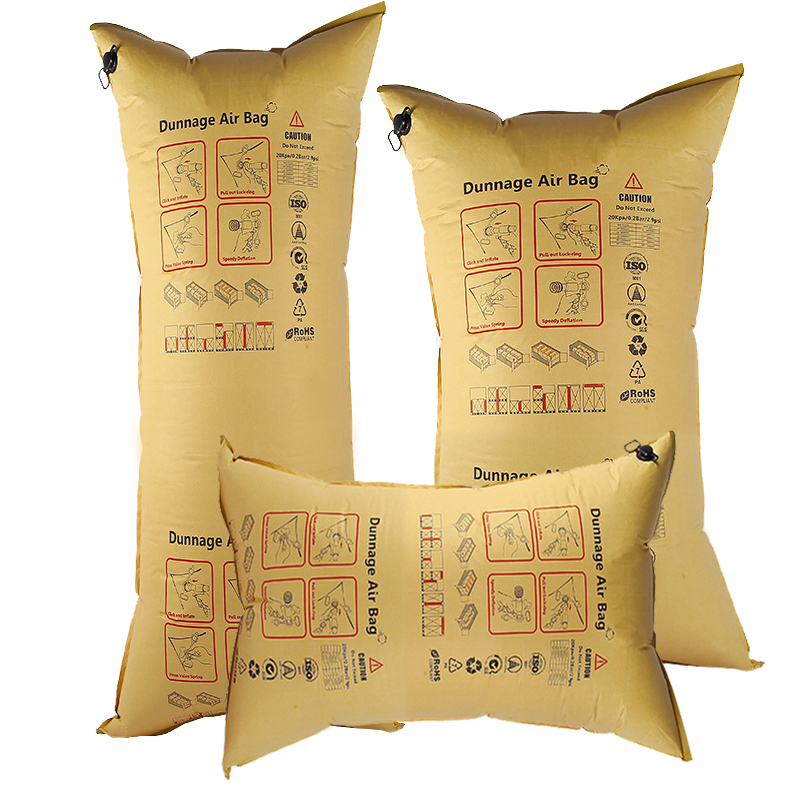
Transit damage creates severe operational bottlenecks. When cargo shifts during transport, the immediate results are rejected loads, damaged goods, and compromised road safety. Beyond the immediate physical damage, load shifting introduces massive supply chain inefficiencies, requiring rework, claims processing, and delayed shipments. Traditional blocking and bracing methods rely heavily on wood and strapping. These materials present significant limitations in modern intermodal, railcar, and over-the-road transport. Nailing wood blocks to trailer floors drives up labor hours, yields inconsistent application across different loading docks, and frequently fails under dynamic transit forces. Modern logistics require an engineered, scalable solution for stabilizing loads. kraft paper dunnage air bags provide a highly effective method for locking cargo in place. Successful implementation requires a precise understanding of material properties, accurate void sizing, and strict inflation protocols to ensure the cargo arrives intact.
Load Locking Mechanics: Kraft paper dunnage air bags function by exerting outward pressure against cargo and container walls, utilizing friction to prevent lateral and longitudinal movement.
Material Synergy: The combination of a high-strength multi-ply Kraft paper exterior and a polyethylene inner bladder provides high burst strength while conforming to irregular load shapes.
Void Sizing is Critical: Effective container cargo protection relies on matching the bag size to the specific void; improper sizing exponentially increases the risk of bag failure or cargo damage.
Supplier Verification: Sourcing from a certified dunnage air bag supplier ensures compliance with industry load-securement standards (e.g., AAR, FMCSA) and guarantees consistent valve and material quality.
The Mechanics of Container Cargo Protection
Defining Dynamic Transit Forces
Shipping containers, dry van trailers, and railcars endure immense physical stress during transit. Cargo is subjected to rapid acceleration and harsh deceleration, creating longitudinal forces that push pallets toward the front or rear doors. Hard braking events in over-the-road transport can generate up to 0.8 Gs of forward force, instantly testing the limits of any securement method. Centrifugal forces during highway turns or rail curves force the load laterally against the container sidewalls. Vertical vibrations from uneven road surfaces or rail joints cause the cargo to bounce, momentarily reducing the friction between the pallet and the floor. This vertical hop allows pallets to walk across the deck. If voids exist between the cargo units, these dynamic forces will cause the load to shift, lean, or collapse entirely. Rail yard shunting presents even more extreme conditions, where railcars coupling at high speeds generate impact forces exceeding 4 Gs. Without proper void management, these impacts destroy rigid packaging and snap standard strapping.
Friction and Load Locking
Inflating a gap filling dunnage air bag fundamentally changes the physics inside the container. The bag expands to fill the empty space, exerting outward pressure against the cargo and the rigid container sidewalls. This pressure dramatically increases the friction coefficient between the pallets and the floor, as well as between the cargo units themselves. The outward force effectively locks the load into a single, unified mass. By eliminating the space where movement begins, the cargo cannot build the momentum necessary to cause damage. The effectiveness of this friction lock depends heavily on the surface area contact. A flat, well-positioned bag maximizes contact with the palletized goods, ensuring the outward pressure translates directly into downward friction against the deck.
Force Distribution and Sidewall Protection
Unlike rigid wood blocking that concentrates transit forces onto a few square inches of the container wall, pneumatic bags distribute these forces evenly. The flexible nature of the bag allows it to contour to the shape of the pallets or product packaging. This even distribution spreads the load forces across a much wider surface area of the container sidewalls. Preventing localized stress points protects the structural integrity of the transport vehicle and prevents crushing damage to the cargo packaging. When a heavy pallet shifts against a wooden brace, the point-load can easily puncture thin trailer walls. A pneumatic bag absorbs that same shift and spreads the pressure across a large section of the wall, keeping the force well below the structural limits of the trailer.
Shock Absorption
Kinetic energy generated by road shocks, pothole impacts, and railcar coupling must go somewhere. Rigid packaging and traditional wood bracing transfer this energy directly into the product. Air-filled bags act as massive shock absorbers. The compressed air inside the bladder compresses further upon impact, absorbing and dissipating the kinetic energy. This dampening effect is highly effective at preventing impact damage to fragile goods, glass containers, and rigid electronics packaging. The polyethylene bladder stretches slightly under sudden pressure spikes, allowing the bag to absorb the hit and immediately return to its original shape, maintaining continuous pressure on the load throughout the journey.
Hybrid Securement Systems
While pneumatic bags excel at preventing lateral side-to-side movement, complex loads often require comprehensive stabilization. Logistics teams frequently deploy hybrid securement systems. Bags are strategically paired with cargo bars, tensioned strapping, or friction mats to provide complete longitudinal front-to-rear stabilization. The bags maintain the lateral pressure and absorb shock, while the heavy-duty straps or bars prevent the unified load from sliding toward the container doors during extreme braking events. For example, a load of heavy paper rolls might use bags between the rolls to prevent lateral shifting, combined with heavy-duty polyester strapping anchored to the container walls to secure the rear of the load.
Engineering Profile of Kraft Paper Dunnage Air Bags
Multi-Ply Construction
The structural anatomy of a kraft dunnage air bag for containersrelies on a dual-component design. The interior consists of an extruded polyethylene inner liner. This bladder is completely impermeable and handles air retention. Manufacturers typically use a co-extruded film to prevent micro-leaks over long transit times. However, polyethylene alone lacks the structural integrity to withstand puncture hazards or maintain shape under high pressure. The outer shell is constructed from multiple layers, or plies, of high-tensile Kraft paper. This multi-ply exterior provides the necessary rigidity, puncture resistance, and friction required to grip the cargo and container walls securely. The paper is often treated with a high-friction coating to prevent the bag from sliding up and out of the void during transit.
Burst Strength and Operating Pressure
The number of paper plies directly dictates the maximum operating pressure and the overall burst strength of the bag. Selecting the correct ply count depends on the weight of the cargo and the mode of transport. Load planners must match the bag's engineering specifications to the specific demands of the route.
Ply Count
Typical Transport Mode
Max Operating Pressure (PSI)
Common Application
2-Ply
Over-the-Road (Trucks)
2.0 - 3.0 PSI
Light to medium weight palletized goods, consumer electronics.
4-Ply
Intermodal / Standard Rail
4.0 - 5.0 PSI
Heavy loads, paper rolls, beverage pallets, canned goods.
6-Ply
Heavy Rail / Ocean Freight
8.0 - 10.0 PSI
Extremely heavy industrial goods, heavy machinery, metal coils.
8-Ply
Extreme Heavy Rail
10.0+ PSI
Specialized heavy freight requiring maximum burst resistance.
Rigidity Advantage
When comparing materials, Kraft paper offers a distinct rigidity advantage over poly-woven alternatives. In tight loading environments, warehouse personnel must slide the uninflated bag into narrow voids between towering pallets. Poly-woven bags tend to fold, droop, or snag during insertion, requiring workers to reach dangerously between unstable loads to position them. The natural stiffness of multi-ply Kraft paper allows the bag to stand upright and slide cleanly into the gap. This rigidity significantly speeds up the loading process and ensures the bag remains properly positioned before the inflation valve is engaged. Dock workers can easily push a tall Kraft bag into a narrow void using a simple positioning pole, a task that is nearly impossible with a floppy poly-woven bag.
Technical Evaluation: Sizing and Void Management
Measuring the Void
Accurate measurement dictates success. Warehouse teams must measure the lateral voids and longitudinal voids after the cargo is loaded but before securement begins. Measure the widest point of the gap. Every bag width has a maximum allowable void size. If the gap exceeds the bag's capacity, the bag will fail to secure the load. Follow these specific steps for accurate measurement:
Load the pallets into the container and push them tightly against the nose and sidewalls.
Identify the remaining empty spaces between the pallets.
Use a tape measure to determine the exact width of the void at its widest point.
Measure the overall height of the palletized cargo to determine the required bag height.
As a general rule, a 36-inch wide bag can fill a maximum void of about 12 inches, while a 48-inch bag can handle up to a 16-inch void.
The Contact Area Rule
There is a strict inverse relationship between void size and bag contact area. As a bag inflates to fill a larger void, it expands outward and becomes increasingly cylindrical. A round bag loses surface contact with the flat sides of the pallets. Reduced surface contact means less friction, which drastically lowers the overall securing capacity. To maintain maximum container cargo protection, the bag must remain relatively flat against the cargo. If a void is too large for the selected bag, teams must use corrugated void fillers, honeycomb panels, or empty pallets to reduce the gap before inserting the bag. A bag that only touches the edges of the pallets will easily pop out of place during a hard braking event.
Height and Placement Formulas
Proper vertical placement prevents bag failure and cargo damage. The height of the bag should closely match the height of the pallet or cargo stack. If the bag extends significantly above the cargo, the unsupported top portion will bulge outward, pulling the lower section out of position and creating a watermelon effect where the bag squeezes upward and pops out of the void. Furthermore, the bag must never rest directly on the container floor. Floor friction during transit will quickly abrade the bottom of the bag, leading to a blowout. Keep the bag at least one inch off the floor during inflation. If securing double-stacked pallets, ensure the bag spans the seam between the top and bottom pallets to lock both tiers simultaneously.
Comparing Cargo Securing Dunnage Bags: Kraft vs. Poly-Woven
Environmental and Moisture Considerations
Choosing between Kraft and poly-woven materials requires evaluating the transport environment. Multi-ply Kraft paper is highly durable and handles the vast majority of dry van and standard shipping container applications perfectly. However, Kraft paper can degrade if exposed to direct, standing water. For flatbed transport, open-top containers, or highly humid environments where condensation is severe, poly-woven cargo securing dunnage bags may be required due to their inherent waterproof properties. Ocean freight crossing multiple climate zones often experiences container rain, where condensation drips from the ceiling. In these specific scenarios, load planners must evaluate if the Kraft paper's wet-strength treatments are sufficient or if a switch to poly-woven is necessary.
Sustainability and Disposal
End-of-life disposal is a major operational consideration at the receiving dock. Kraft bags offer a streamlined recycling process. Once the bag is deflated and removed, personnel can easily slice the bag open, separate the inner polyethylene bladder from the outer paper shell, and place both materials into their respective recycling streams. Fully synthetic poly-woven bags are often more difficult to recycle locally, frequently ending up in general landfill waste depending on regional facility capabilities. Facilities focused on reducing their carbon footprint heavily favor Kraft paper options due to the high percentage of recycled content used in the paper manufacturing process.
Performance and Operational Efficiency
When evaluating performance, logistics managers must analyze the labor time required for installation and the subsequent reduction in damage claims. Kraft bags install rapidly due to their rigidity. A single worker can position and inflate a bag in under two minutes, compared to the extensive time required to measure, cut, and nail wood blocking. The immediate reduction in shifted loads and crushed product packaging directly improves warehouse throughput and eliminates the administrative burden of processing freight claims. Faster loading times mean trucks spend less time at the dock, improving overall fleet utilization and reducing driver detention times.
Implementation Risks and Mitigation Strategies
Over-Inflation and Under-Inflation
Improper pressure management is the leading cause of securement failure. Over-inflation turns the bag into a rigid wedge. This excessive pressure can crush fragile cargo packaging, damage the actual product, or even bow the sidewalls of a thin dry van trailer. Conversely, under-inflation fails to generate enough friction. An under-inflated bag allows the cargo to shift slightly. This slight movement builds momentum, eventually crushing the under-pressurized bag and leading to a complete load collapse. Operators must understand that air pressure changes with temperature. A bag inflated in a freezing warehouse will expand significantly when the truck drives into a hot desert climate, potentially causing an over-inflation blowout if not properly regulated.
Puncture Hazards
The interior of a shipping container is a hazardous environment for pneumatic devices. Exposed nails protruding from the floor, splintered wooden pallets, and sharp edges on metal cargo can easily puncture a bag. Mitigation requires strict visual inspections before loading. Personnel must sweep the floor and hammer down exposed nails. When securing loads with sharp edges, mandate the use of corrugated buffer materials, friction mats, or thick cardboard sheets placed between the cargo and the bag to act as a protective shield. Never place a bag directly against a sharp metal corner or a broken pallet board.
Inflation Tool Standardization
Relying on unregulated air compressors or standard shop air nozzles guarantees inconsistent inflation. Facilities must mandate the use of standardized, pressure-regulated inflator tools. High-quality tools utilize Venturi technology, which pulls in ambient outside air alongside the compressed air stream, dramatically increasing inflation speed. More importantly, these tools feature automatic pressure regulators that shut off airflow once the target PSI is reached, preventing over-pressurization regardless of the operator's experience level. Standardizing the inflation tool across all loading docks ensures that every bag is filled to the exact same pressure, eliminating the human error associated with guessing the inflation level.
Selecting a Reliable Dunnage Air Bag Supplier
Compliance and Certification
Not all bags are manufactured to the same standards. It is critical to verify that a dunnage air bag supplier provides products tested and certified by relevant transport authorities. In North America, the Association of American Railroads sets the benchmark for load securement. Bags are categorized by AAR levels based on their burst strength and intended use. Utilizing non-certified bags for rail transport will result in immediate load rejection by rail inspectors. Always request documentation proving the bags have passed rigorous burst testing and dynamic impact testing before integrating them into your securement protocols.
Valve Technology
The valve is the most critical mechanical component of the bag. Evaluate the valve type before committing to a supplier. Traditional spring-loaded valves are common but can be slower to fill. Modern fast-fill valves allow for rapid inflation and feature high-retention seals that prevent micro-leaks during long ocean voyages. Additionally, consider deflation capabilities. Valves that allow for quick, controlled deflation make the unloading process significantly safer and faster for receiving personnel. A high-quality valve will also feature a swivel mechanism, allowing the operator to connect the inflator tool from any angle in tight loading spaces.
Technical Support and Load Planning
A transactional vendor simply ships pallets of bags. A true partner provides comprehensive technical support. Assess the supplier's ability to offer load planning software or 3D modeling to determine optimal bag placement. The supplier should conduct on-site training for warehouse teams, teaching proper void measurement and inflation techniques. Furthermore, they should offer customized securement audits, reviewing your current loading patterns and suggesting specific improvements to reduce damage rates. Field support is essential for troubleshooting complex loads and ensuring your team is maximizing the effectiveness of the securement materials.
Conclusion
Kraft paper dunnage air bags represent a highly effective, structurally rigid, and operationally efficient solution for securing containerized cargo. When correctly sized, properly positioned, and accurately inflated, they eliminate the void spaces that allow dynamic transit forces to destroy shipments. The multi-ply construction provides the necessary burst strength to handle everything from highway truck transport to heavy rail applications.
The decision to implement specific bags must be driven by hard data: accurate void dimensions, total cargo weight, the specific transport mode, and the required ply-strength. Relying on guesswork leads to under-performing securement and damaged goods. By matching the engineering specifications of the bag to the physical demands of the load, logistics teams can virtually eliminate transit damage.
Take the following actionable steps to improve your load securement process:
Conduct a pilot test using Kraft bags on your most frequently damaged shipping routes to measure the immediate reduction in freight claims.
Procure standardized, pressure-regulated Venturi inflator tools to ensure consistent application across all loading dock personnel.
Develop a standardized load securement Standard Operating Procedure utilizing supplier-provided sizing charts and maximum void guidelines.
Train all warehouse staff on the contact area rule and the proper use of corrugated void fillers for oversized gaps.
FAQ
Q: What is the maximum void size a kraft paper dunnage air bag can fill?
A: The maximum void depends on the bag's width. Generally, a 36-inch wide bag can safely fill up to a 12-inch void, while a 48-inch wide bag can fill up to a 16-inch void. Exceeding these limits causes the bag to become cylindrical, losing surface contact and securing power.
Q: Can kraft dunnage air bags for containers be reused?
A: While high-quality multi-ply Kraft bags are durable, reuse is generally not recommended for heavy industrial transport due to unseen micro-abrasions or valve wear. Some light-duty applications may permit reuse, but single-use guarantees maximum burst strength and reliability.
Q: How do I determine the correct ply rating for my cargo?
A: Ply rating is determined by cargo weight and transport mode. Use 2-ply for standard over-the-road truck shipments. Select 4-ply for intermodal or standard rail transport. Require 6-ply or 8-ply for heavy rail, ocean freight, or extremely dense industrial loads like paper rolls.
Q: What is the recommended inflation pressure for gap filling dunnage air bags?
A: Recommended pressure varies by ply count. A 2-ply bag typically operates between 2.0 and 3.0 PSI. A 4-ply bag requires 4.0 to 5.0 PSI. Always use a pressure-regulated inflator tool and follow the manufacturer's exact specifications printed on the bag.
Q: Are kraft paper dunnage bags recyclable?
A: Yes. Once deflated, the outer Kraft paper shell can be separated from the inner polyethylene plastic bladder. Both materials can then be placed into their respective standard recycling streams, making them an environmentally friendly securement option.
Q: How do kraft bags compare to wood blocking and bracing?
A: Kraft bags are significantly faster to install, require less manual labor, and distribute transit forces evenly across the cargo and container walls. Wood blocking concentrates force into small areas, takes longer to nail down, and damages trailer floors over time.