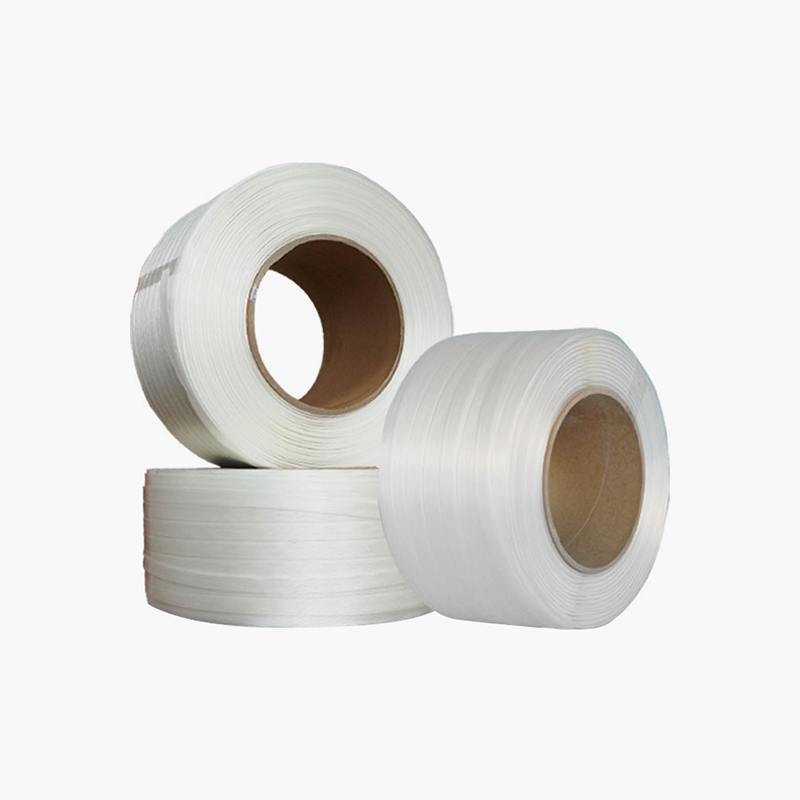
Material failure during heavy cargo transit leads to product damage, safety liabilities, and supply chain disruptions. When securing multi-ton loads on flatbeds or ocean containers, the margin for error is zero. Logistics engineers transitioning from traditional steel banding to synthetic alternatives face a specific hurdle. They must verify that non-metallic options can genuinely withstand extreme dynamic loads over long durations. Skepticism is natural when replacing steel with polymer-based materials.
The objective bridge between manufacturer claims and real-world reliability is rigorous, standardized testing. Evaluating composite cord strapping tensile strength involves precise laboratory methodologies that measure breaking points, elasticity, and joint efficiency under extreme stress. Understanding how these tests are conducted provides the technical validation required to trust synthetic strapping with high-value payloads.
System Strength vs. Linear Strength: Tensile strength testing must evaluate both the raw strap (linear) and the strap-and-buckle combination (system) to accurately reflect real-world cargo lashing safety.
Standardized Testing Protocols: Reliable composite cord strapping tensile strength is verified using Universal Testing Machines (UTM) in strict accordance with ASTM and EN packaging quality standards.
Elongation and Shock Absorption: Testing proves that composite strapping absorbs impact energy better than steel by measuring elastic elongation before the breaking point.
Verification is Mandatory: Procurement decisions should rely exclusively on certified testing reports from ISO/IEC 17025 accredited third-party laboratories, not just marketing specifications.
The Engineering Behind Composite Cord Strapping Tensile Strength
Securing heavy loads requires specific baseline performance metrics. A successful lashing system must deliver high break strength to hold the physical weight, low creep to prevent tension loss over time, and high retained tension to keep the cargo static during transit. If a strap stretches permanently under load or loses its grip during temperature fluctuations, the cargo will shift. This movement alters the center of gravity on a trailer or railcar, leading to potential derailments or rollover events.
The architecture of high tensile polyester cord strapping dictates its mechanical properties. The manufacturing process aligns continuous, high-tenacity polyester yarns in a parallel formation. These load-bearing core yarns provide the primary linear strength. Unlike woven strapping where yarns cross over one another and create internal friction points, parallel yarns pull evenly under stress. This alignment maximizes the load-bearing capacity of every individual fiber.
To protect this core, the yarns are encased in a clear or extruded polymer coating. This coating serves multiple structural purposes. It binds the yarns together to distribute the load evenly across the width of the strap. It provides severe abrasion resistance against rough cargo edges, such as rough-sawn timber or stamped metal parts. The extrusion process also creates a stiff profile that allows operators to easily thread the strap under pallets and through wire buckles without the material folding or snagging.
When comparing these synthetic profiles to traditional steel banding, the tensile strength debate shifts from pure rigidity to dynamic energy absorption. Steel possesses exceptionally high static break strength but minimal elasticity. When subjected to a sudden impact—such as a railcar shunting at eight miles per hour or a truck braking hard on a highway—steel cannot stretch. It absorbs the shock until it reaches its yield point, at which time it snaps violently. Composite strapping is engineered with a specific degree of elastic elongation. It stretches slightly under sudden dynamic loads, absorbing the kinetic energy, and then retracts to its original tension state. Furthermore, the polymer construction eliminates the corrosion issues inherent to steel, preventing rust transfer to the cargo and maintaining structural integrity in maritime environments.
Quantifying strapping performance requires controlled laboratory environments. Engineers rely on specific testing categories to ensure the material will not fail under operational stress. These tests isolate different failure modes, from pure tensile rupture to friction loss at the securing joint.
Before any physical stress is applied, sample preparation and conditioning are mandatory. Polyester and polymer coatings can exhibit slight variations in mechanical behavior based on ambient conditions. Laboratories condition the strapping samples in climate-controlled chambers, typically at 23°C (73.4°F) and 50% relative humidity, for at least 24 hours. This standardization ensures baseline accuracy and guarantees that test results are repeatable across different batches and testing facilities.
Universal Testing Machines (UTM) & Linear Testing
The foundational metric for any securing material is its linear break strength. This is measured using a Universal Testing Machine (UTM) configured for a pull test at a constant rate of extension (CRE). The UTM pulls the strap apart at a steady, controlled speed, usually measured in millimeters per minute, ensuring the load is applied evenly.
A critical component of this test is the gripping mechanism. Standard flat clamps would crush the polymer coating and damage the polyester yarns, causing the strap to break prematurely at the pinch point. This invalidates the test because it measures the crush resistance of the clamp rather than the tensile capacity of the strap. To solve this, laboratories use specialized capstan grips or split-drum clamps.
The technician cuts a standardized length of composite strapping, typically one meter.
The strap is wrapped around the upper and lower curved capstan drums.
The ends are secured, distributing the clamping force over a larger surface area.
The UTM initiates the pull at a constant rate, often 50mm per minute.
High-precision load cells measure the exact force applied in real-time.
The software plots a stress-strain curve, recording the load at every millisecond until catastrophic failure occurs in the free-spanning section.
The peak force recorded just before the strap snaps is the official linear break strength. This number provides the baseline for all subsequent engineering calculations.
Joint Efficiency (System Strength) Testing
In the field, a strap is only as strong as its connection point. Cargo is never secured with a single, continuous loop of unbroken strapping; it is always joined using a buckle. Therefore, strapping tensile strength testing must evaluate the system strength—the combined performance of the strap and the specific wire buckle used to secure it.
System strength testing replicates the exact lashing configuration used by operators. A length of composite strapping is threaded through a heavy-duty wire buckle, tensioned, and then placed into the UTM. The machine pulls the system apart just as it does in the linear test. System strength is inherently lower than linear strength because the buckle introduces friction points and localized stress concentrations on the yarns.
This test identifies two distinct failure modes: strap rupture or buckle slippage. If the strap breaks, the test records the maximum system strength. If the strap slips through the buckle before breaking, the joint efficiency is compromised. A high-quality system typically achieves a joint efficiency of 75% to 85% of the strap's linear strength. If slippage occurs at low loads, it indicates a mismatch between the strap's polymer coating and the buckle's surface texture.
Creep and Tension Retention Testing
Heavy cargo often spends weeks in transit. Static load testing over extended periods measures the strap's ability to maintain tension without creeping. Creep is the slow, permanent deformation of a material under constant stress. In this test, the strapping system is subjected to a sustained load—typically 40% to 50% of its maximum break strength—for several days or weeks inside a climate chamber. Load cells monitor any drop in tension. Low creep is essential; if a strap elongates permanently during a long ocean voyage, the cargo will become loose and hazardous.
Dynamic Load and Shock Testing
Real-world transit is not static. Laboratories simulate sudden impacts to measure the strap's shock absorbency. Using drop tests or specialized hydraulic sleds, sudden G-forces are applied to a secured load. This testing validates the elastic recovery of the composite material, proving its ability to elongate under severe impact and recover its holding force without snapping. This elastic memory is the primary mechanical advantage over rigid steel banding.
Navigating Packaging Quality Standards and Compliance
Laboratory data is only useful when mapped against recognized international regulatory frameworks. Compliance with established packaging quality standards ensures that the strapping meets the minimum safety requirements for domestic and international freight transport.
The American Society for Testing and Materials (ASTM) provides the primary framework for non-metallic strapping under the ASTM D3950 standard. This specification dictates the exact testing parameters for polymer-based strapping, including minimum break strengths, acceptable elongation percentages, and approved securing methods. When a manufacturer claims ASTM D3950 compliance, it means their product has passed rigorous, standardized UTM testing and meets the baseline criteria for safe industrial use.
For rail transport, the Association of American Railroads (AAR) enforces some of the strictest regulations globally. AAR certification requires extensive dynamic testing, including actual railcar impact tests, to verify cargo lashing safety. European Standards (EN 12195-2) provide similar frameworks, focusing heavily on load distribution and joint efficiency. A passing grade in these standards means the strapping system can withstand the specific G-forces associated with rail shunting, heavy braking, and rough seas.
Beyond mechanical pulling, standards require environmental stress testing. Cargo is exposed to harsh elements. Tensile strength is tested after prolonged exposure to UV radiation, extreme temperature fluctuations, high humidity, and chemical contact. These tests ensure that the outer polymer coating effectively protects the inner polyester core from degradation. If the coating fails, UV rays will rapidly break down the polyester yarns, severely reducing the linear break strength.
Compliance requires continuous Manufacturing Quality Assurance (QA). A single passing test certificate from five years ago is insufficient. Reputable manufacturers implement continuous batch testing. Samples are pulled from the production line daily and subjected to UTM testing to guarantee that every roll of composite cord strapping meets the certified specifications. This continuous QA prevents material variances from compromising field safety.
Evaluating Specific Specifications: The ES40P Composite Cord Strap
To understand how laboratory data translates to field application, it is helpful to evaluate a heavy-duty industry standard like the ES40P composite cord strap. This model serves as a practical benchmark for procurement teams analyzing technical specification sheets.
When analyzing the spec sheet for an ES40P strap, engineers look at two primary numbers: the linear break strength and the system break strength. A typical heavy-duty composite strap might boast a linear strength of 1,000 kg (2,200 lbs). However, the critical operational number is the system strength. If the joint efficiency is 80%, the usable system strength is 800 kg (1,760 lbs). Securing calculations must always be based on the system strength, never the linear strength alone.
The system strength of the ES40P relies heavily on buckle metallurgy. Pairing a high-tensile strap with a substandard buckle guarantees failure. The ES40P is tested alongside heavy-duty phosphated or galvanized wire buckles. The phosphated coating provides a rougher micro-texture, increasing the friction coefficient between the polymer strap and the metal buckle. This specific pairing is what prevents slippage under maximum load, allowing the system to achieve its rated joint efficiency.
Translating these specifications to actual payload requirements involves strict mathematical frameworks. Engineers calculate the required number of straps based on the tested system strength, the total weight of the cargo, the friction factor between the cargo and the pallet, and the anticipated G-forces during transit. For example, road transport typically requires securing against 0.8G of forward force. If you have a 10,000 kg load on a wooden pallet (friction factor of 0.3), the lashing system must absorb the remaining force. Using a strap with an 800 kg system strength allows the engineer to calculate exactly how many lashing points are required to prevent forward movement.
Performance Metric
Linear Testing Focus
System Testing Focus (Strap + Buckle)
Real-World Application Value
Break Strength
Maximum force before yarn rupture
Maximum force before joint failure or slippage
Determines the maximum weight a single lashing point can secure
Elongation
Stretch percentage of raw material
Stretch including buckle seating
Measures shock absorbency during sudden impacts or hard braking
Tension Retention
Creep of polyester core over time
Friction hold at the buckle under static load
Ensures cargo remains tightly bound during multi-week ocean transits
Failure Mode
Catastrophic snapping
Slippage vs. Rupture
Identifies if the buckle is correctly matched to the strap's polymer coating
Conceptual Trade-Offs in Strapping Procurement
Choosing tested composite cord strapping over unverified alternatives or traditional steel involves evaluating operational efficiency, ergonomics, and risk management. While unverified synthetic straps may appear identical on a spool, the lack of certified tensile testing introduces unacceptable risk into the supply chain. Material failure leads to rejected loads, damaged goods, and severe safety hazards for unloading personnel.
The strength-to-weight ratio is a major operational advantage. Composite strapping provides equivalent system strength to steel banding at a fraction of the weight. A spool of heavy-duty composite strap can be easily carried by a single operator, whereas a coil of steel requires mechanical assistance or multiple workers to maneuver safely. This weight reduction directly improves loading dock efficiency and reduces physical fatigue.
Ergonomics and workplace safety are heavily influenced by material choice. Steel banding possesses sharp edges that routinely cause lacerations. When tensioned steel is cut, the stored kinetic energy causes the band to whip outward violently, posing a severe risk of facial or ocular injury. Composite strapping is soft to the touch, has no sharp edges, and falls safely to the ground when cut under tension. By transitioning to tested synthetic strapping, facilities drastically reduce workplace injuries, lower the maintenance requirements for tensioning tools, and eliminate the rust damage that steel bands frequently inflict on finished goods.
Implementation Risks and Mitigation in Cargo Securing
Laboratory testing proves what the material is capable of under perfect conditions. However, implementation risks arise when tested tensile strength fails in real-world applications due to human error, poor lashing geometry, or incorrect tooling.
Improper buckle threading is the most common cause of system failure. If an operator threads the composite strap backward or bypasses the self-locking mechanism of the wire buckle, the friction coefficient drops to near zero. Under load, the strap will simply pull through the buckle smoothly, rendering the laboratory system strength ratings completely void. The lashing will fail well below its rated capacity, allowing the cargo to shift immediately.
Inadequate tensioning tools present another significant risk. Composite strapping requires specific windlass tensioners designed to grip the polymer coating without tearing it. Using incompatible tools, such as those designed for steel or woven strapping, will either under-tension the strap or damage the outer extrusion. Under-tensioning allows the load to shift upon initial movement, creating dynamic forces that exceed the strap's capacity. Damaging the coating exposes the polyester yarns to abrasion and environmental degradation, rapidly reducing the linear break strength.
The threat of sharp edges cannot be ignored. While the polymer coating provides excellent abrasion resistance, securing a highly tensioned strap over a sharp 90-degree steel corner creates localized stress concentrations. The tension is no longer distributed evenly across the parallel yarns; instead, the sharp edge cuts into the inner core. This drastically reduces the effective tensile strength of the lashing.
To mitigate these risks, facilities must implement strict operational protocols:
Conduct mandatory operator training programs focused specifically on correct buckle threading and tool usage.
Perform routine audits of lashing practices to ensure operators are not taking shortcuts on the loading dock.
Standardize tensioning tools to match the specific composite cord strapping deployed, preventing equipment mismatches.
Mandate the use of edge protectors whenever strapping passes over rigid, sharp corners to maintain full tested tensile capacity.
Conclusion
Take the following actions to upgrade your cargo securing protocols:
Request certified third-party UTM test reports from your current strapping vendor to verify their system strength claims.
Audit your loading dock to ensure operators are using the correct phosphated wire buckles and compatible windlass tensioners for your specific strapping profile.
Order sample rolls of high-tensile composite strapping to conduct in-house tension and threading trials with your logistics team.
Implement mandatory use of edge protectors on all sharp-cornered freight to preserve the maximum tensile capacity of the lashing system.
FAQ
Q: What is the difference between linear strength and system strength in composite strapping?
A: Linear strength measures the breaking point of the raw strap alone. System strength measures the breaking point of the strap when secured with a wire buckle. System strength is always lower due to friction and stress at the joint, and it is the only metric you should use when calculating cargo securing requirements.
Q: How does the tensile strength of composite cord strapping compare to steel banding?
A: High-quality composite strapping can match the system break strength of steel banding. However, composite strapping offers superior shock absorbency. While steel is rigid and can snap under sudden impact, composite strapping elongates slightly to absorb the kinetic energy and then recovers its tension.
Q: What equipment is used for strapping tensile strength testing?
A: Laboratories use Universal Testing Machines (UTM) equipped with high-precision load cells. To prevent the strap from breaking at the clamp, specialized capstan grips or split-drum clamps are used to distribute the pulling force evenly across the material during the constant rate of extension test.
Q: How does elongation affect the safety of high tensile polyester cord strapping?
A: Controlled elongation is a critical safety feature. It allows the strapping to stretch under sudden dynamic loads—like hard braking or railcar impacts—absorbing the shock without snapping. The strap then uses its elastic memory to retract and maintain a tight hold on the cargo.
Q: What packaging quality standards apply to composite cord strapping?
A: The primary standard is ASTM D3950, which dictates testing parameters for non-metallic strapping. For heavy rail transport, Association of American Railroads (AAR) certification is required. European Standards (EN 12195-2) also provide strict guidelines for load distribution and joint efficiency in cargo lashing.
Q: How do wire buckles impact the overall tensile strength test results?
A: Wire buckles determine the joint efficiency of the system. If a buckle is too smooth or incorrectly sized, the strap will slip through it under load, resulting in a low system strength. Phosphated buckles provide a rougher texture that grips the polymer coating, maximizing the system's holding power.